

#LifeLessons - The Biggest Life Learnings of Double Olympian Samantha Murray
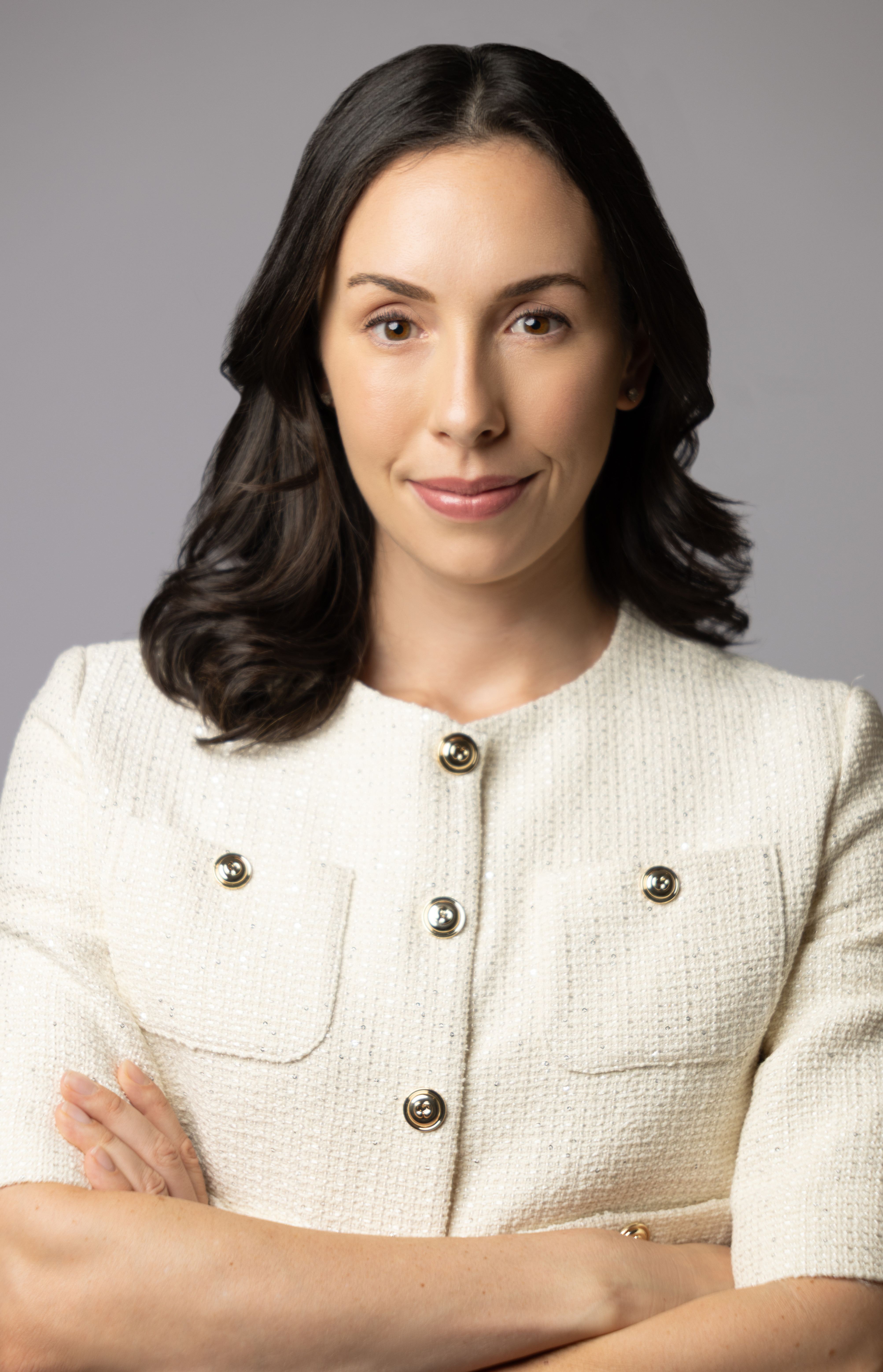
Name: Samantha Murray
Age: 36
Job Title: Presenter & Journalist
Samantha Murray is an Olympic silver medallist, double Olympian, World Champion, broadcast journalist and keynote speaker, currently based in Riyadh, Saudi Arabia.
Samantha represented Great Britain in modern pentathlon for almost a decade, winning Olympic silver at London 2012 before becoming World Champion in 2014 and competing at her second Olympic Games in Rio in 2016. Since stepping away from elite sport, her career has evolved across broadcasting, journalism, education and public speaking. She has worked with broadcasters including the BBC, Sky Sports, Discovery and the Olympic Channel and now regularly contributes to international news and current affairs programming from the Middle East.
Alongside broadcasting, Samantha is passionate about women and girls in sport, physical activity and the role movement can play throughout different stages of a woman's life. But perhaps her biggest transition has happened away from sport. Now 36 and a mother of two young daughters, Samantha has navigated retirement from elite competition, career reinvention, motherhood, relocating internationally and the challenge of finding an identity beyond the one she spent most of her life building. Here, she shares three lessons that experience has taught her and that she is, admittedly, still learning.
// Life Lesson 1: You are allowed to reinvent yourself
For most of my twenties, I knew exactly who I was. I was an athlete. More specifically, I was an Olympic athlete. My days had structure and purpose and almost every decision came back to one question: will this make me better?
When you spend years working towards something as enormous as an Olympic Games, your identity inevitably becomes wrapped up in it. I was incredibly fortunate. I stood on an Olympic podium in my home country, became World Champion and represented Great Britain at two Olympic Games. They are experiences I will always be immensely proud of.
What nobody really prepares you for is what happens when it stops. Retiring from sport meant losing much more than a training programme. I lost the routine, the team around me and the very clear measurement of whether I was succeeding. Suddenly nobody was handing me the next four-year plan.
I've tried several things since. I've worked in education, qualified as a personal trainer, moved countries, become increasingly involved in journalism and broadcasting and built a career in speaking and moderating. Some chapters have fitted better than others.
For a long time, I think I felt I should have the answer. I had been incredibly driven in sport, so surely, I should be able to pick my next career and attack it with the same certainty?
My learning is that life doesn't really work like that. I've realised that reinvention doesn't mean disregarding everything that came before. I bring the athlete with me. The discipline, curiosity, ability to perform under pressure and willingness to keep learning are still there; they're simply being used differently.
At 36, I'm probably more ambitious than I've been at any point since retiring from sport. But I'm also much more comfortable saying that I'm still working things out. Just because I worked incredibly hard to become one version of myself, it doesn’t mean I have to remain her for the rest of my life. Each new phase is wiser, rounder and stronger because of the lessons that came before it.
// Life Lesson 2: Fitness has to fit around your life, not consume it
My relationship with exercise has changed enormously. For years, movement was my job. I trained several times a day and my body was constantly assessed by what it could produce: how fast could I swim, how strong was I, how quickly could I run?
Today, I have two young daughters, a career, a home and the usual logistical chaos that comes with family life. I'm not going to train like an Olympian anymore and nor should I.
But movement remains one of the most important things I do for myself. I think women can sometimes be presented with two extremes: either you're following a perfect fitness routine, or you're not doing enough. Motherhood taught me how unrealistic that is.
Sometimes exercise is a proper strength session. Sometimes it's a run pushing a buggy. Sometimes it's walking because that's what I can fit into the day. I've had to stop comparing what my body can do now with what it could do when training full-time for an Olympic Games. That's not lowering my standards. It's recognising that my life has changed.
As I move through my thirties, strength and maintaining muscle have become increasingly important to me. But so has enjoying movement. I want my daughters to grow up seeing exercise as something women simply do; not as punishment for what they've eaten or something motivated entirely by how they look.
My body has won an Olympic medal. It has also carried and given birth to two children. Those experiences required very different things from it. I've learned to respect both.
// Life Lesson 3: Don't wait for community to find you
Becoming a mother was one of the most wonderful moments of my life. It was also, if I'm truthful, one of the most isolating.
I gave birth to my first daughter during lockdown. There was this extraordinary contradiction: my world had just changed in the biggest and most beautiful way, while the physical world around me had suddenly become incredibly small.
Before motherhood, I had spent years surrounded by people. Elite sport might look individual when you see one athlete standing on a podium, but behind that athlete is an enormous community. I trained alongside other athletes every day. There were coaches, physios, doctors, friends and teammates. I travelled constantly and was accustomed to being part of something.
Then I became a new mum at a time when we were being told to stay apart. There were no normal baby groups, casual coffees or easy opportunities to meet other women going through the same thing. I adored my daughter, but those two truths can coexist: you can be overwhelmingly grateful for your baby and still feel lonely.
I think we need to be able to say that more often. Motherhood has taught me that community isn't a luxury. Women need other women.
Moving to Riyadh reinforced that lesson. When you arrive somewhere new as an expatriate, you leave behind the friendships and networks that have developed naturally over years. Suddenly you must be intentional about creating them again.
It can feel uncomfortable. It’s message somebody you barely know and suggest coffee. It’s turning up to something alone. It’s introducing yourself: what do you choose to say and share? But I've learned to do it. Admittingly, it has felt uncomfortable along the way.
And interestingly, I now see the same thing happening through sport across the Gulf. Women are creating running groups, cycling clubs and walking communities. Yes, they're exercising, but often something much bigger is happening. They're finding their people.
It reminds me that throughout every stage of my life, community has mattered.
As a child, friends kept me going back to training. As an Olympian, my team helped me achieve things I could never have achieved alone. As a new mother, I discovered how difficult life could feel without that network. And as an expatriate, I've learned that sometimes you have to actively go out and create it.
We talk a lot about independence and resilience, particularly when describing successful women. Both are important. But I've learned that being strong doesn't mean doing everything alone. Sometimes strength is recognising that we need one another.


More people seem to search for birthday wishes for brother copy paste when they need something suitable for a card, text message, or social media post.
يحتاج الطلاب وأولياء الأمور إلى معلومات واضحة تساعدهم على فهم الخدمات التعليمية الرقمية والاستفادة منها بسهولة. البحث عن massar service يمكن أن يكون بداية جيدة لمعرفة الخدمات المتاحة، خصوصاً عندما تكون المعلومات مرتبة ومبسطة وتشرح للمستخدم الخطوات الأساسية دون تعقيد أو تكرار.
Samantha, your insights on actively building community really resonated, especially the shift from being surrounded by a team to having to intentionally seek connections as a new mother and expat. It's so true that while independence is valued, true strength often comes from admitting we need others. This journey of continuous learning and growth is much like how we adapt to new challenges, even those found in sz games. 🤔